
AECC- Career Counselling Session

 On the 6th of February, Monday, 10 am, representatives from AECC came to AusIS to give a presentation in the auditorium on their services and procedures. AECC Global is an International study abroad education consultant in Bangladesh, offers the best study courses in US, Australia, Canada, UK with Scholarships. They manage application processes free of cost and will assist in every step, from course selection to university application. 
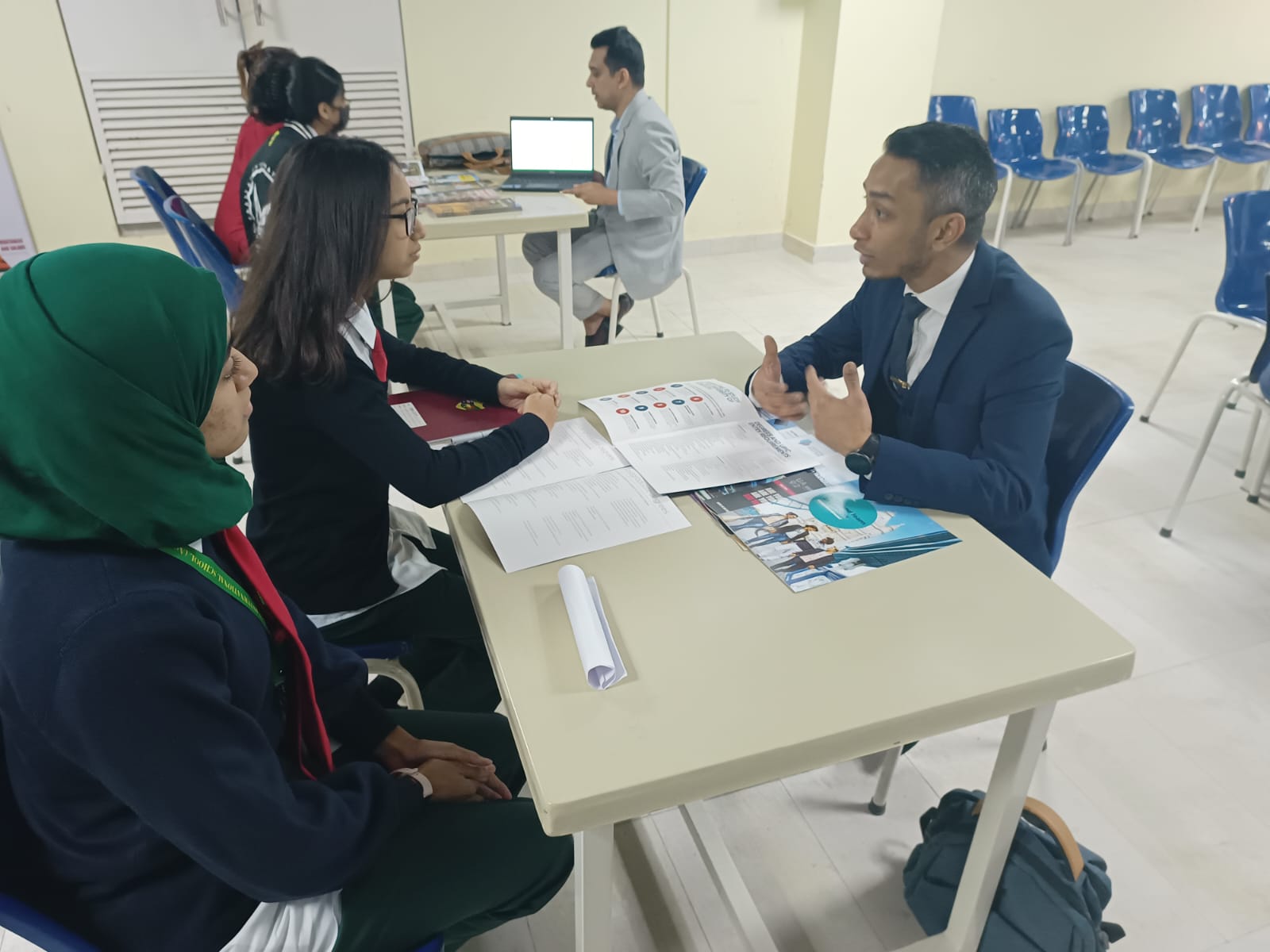


Their headquarters in Bangladesh are located in Dhaka, BTI Landmark, 16 Gulshan Ave, Dhaka 1212. After they were done giving the presentation at 11 pm, we all went to the cafeteria so that we could talk to a few of the consultants of AECC that came in one on one.

The Meetings were held till 12:30 pm where students talked about where they wanted to study abroad or what do they have to do to study abroad. The whole event was a huge success as students realized their options in universities across the world and the application requirements and processes.

Comments

Popular posts from this blog

IBDP Student's Interaction with Cybersecurity Expert

  On Tuesday, November 15th, 2022. DP Y1 student Ariyaan Ahmed's father, Mr. Tanmay Ahmed visited the campus to conduct our first Parent - Student Workshop. Mr. Tanmay has been working as a specialist in the field of cybersecurity for years now. He is currently working for the Bangladesh government's cybersecurity division. During this interactive workshop, Mr. Tanmay discussed and interacted with the student's knowledge of Information Technologies and Global Societies (ITGS), a group 3 subject from our IB curriculum taught by Miss Irtifa Ali. Mr. Tanmay discussed why the knowledge of (ICT) or information communications technology is essential to understand in this developing era, where the advancements of technology are constantly changing the world we live in. With the many welfare technological advancements it brings, there are several downsides it brings, such as cybercrime. Mr. Tanmay discussed strategies our government is planning on implementing to fight against cy...

The 3C’s of Digital Society

The subject Digital Societies is a whole new experience for all the new IBDP students. We look into Global Societies, Technology Innovation, Multimedia, Political Stakes, etc. Digital Societies are divided into several categories and organized according to the terms. During our journey in Term 1, we looked into the hardware and software, evolution of computers, malwares, security, licenses and databases. The students had the opportunity to learn about the digital world, its evolution, and its impact on our societies. In term 2, we are currently working on the Social and Political use of Technology, such as Home and Leisure, IT in Health, Business and learning about the philosophy and arts behind Ergonomics. Digital Societies is categorized in 3 different core elements (Content, Concept and Context). Students can increase their thinking and communication skills through various discussions with their facilitator and peers. We investigate the impacts, laws and regulations, the pros ...

Exploring Biodiversity: IB DP Year 2 Biology Students Conduct Line Transect Activity

  Recently, IB DP Year 2 biology students embarked on an exciting line transect activity on the new school field to study plant species and soil properties. This innovative method of identifying organisms within an ecosystem involves systematic sampling at regular intervals to observe and record biodiversity along a line.   Using a 10-meter rope, students examined organisms every 2 meters along the transect, identifying two plant species: Cornus serica L. and Cenchrus echinatus L. . Despite aiming to collect five soil samples for testing pH, salinity, and total dissolved solids (TDS), the experiment was interrupted by rain, limiting the collection to three samples. Another challenge was the presence of bricks in the soil, which prevented digging at one of the sites. In the lab, students measured TDS levels ranging from 18.2 to 22 ppm, salinity from 17 to 18, and pH between 7.63 and 7.68. This hands-on activity provided valuable insights into the local ecosystem within the...